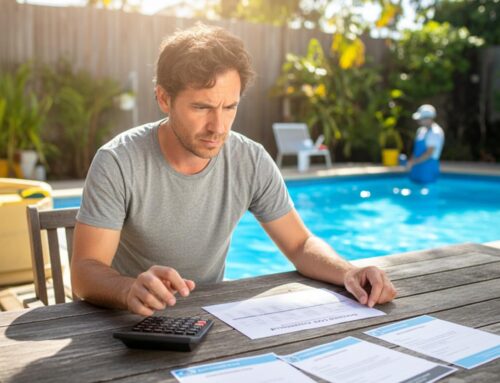
Pool checking on a Saturday morning, expecting crystal-clear water, instead reveals a murky, milky haze. The water’s safe to swim in – probably – but it looks uninviting, leaving questions about whether to add more chlorine, run the pump longer, or call someone who actually knows what they’re doing.
Cloudy pool water isn’t just an aesthetic problem. It’s a warning sign that something in pool chemistry, filtration, or circulation has shifted out of balance. Left unchecked, that cloudiness can progress to algae growth, equipment strain, and water that’s genuinely unsafe. The good news? Most cases of cloudy pool water are fixable once the root cause is understood.
This guide walks through the seven most common reasons Australian pools turn cloudy, how to diagnose each one, and the practical steps to restore clarity – without wasting money on unnecessary chemicals or pool equipment.
Poor Filtration Problem: The Silent Saboteur
The pool filter is the workhorse that keeps water clear. When it’s clogged, undersized, or running on a schedule that’s too short, debris and fine particles stay suspended in the water, creating that telltale cloudiness.
Sand filters are the most common culprit. Over time, the sand media compacts and loses its sharp edges, reducing its ability to trap fine particles. If a sand filter is more than five years old and hasn’t been replaced, it’s likely contributing to the problem. Backwashing helps temporarily, but it won’t restore the filter’s original efficiency.
Cartridge filters can clog faster than expected, especially during high-pollen seasons or after heavy storms. Visual inspection often reveals cartridges that are grey or brown instead of white – a clear sign they’re overdue for cleaning or replacement.
DE (diatomaceous earth) filters offer the finest filtration but require regular recharging. If the DE powder hasn’t been added correctly, or if the grids are torn, the filter won’t perform as designed.
The fix: Start by checking the filter’s pressure gauge. If it’s 8-10 psi above the clean baseline, backwash (for sand or DE) or remove and hose down the cartridge. If cloudy pool water persists after cleaning, the filter media may need replacing. For persistent issues, consider upgrading to a larger filter or switching to a cartridge system better suited to Australian conditions.
Running the pump for at least 8-10 hours a day during summer is non-negotiable. Shorter cycles mean the water doesn’t pass through the filter enough times to stay clear. Cutting pump time to save on electricity trades short-term savings for long-term headaches.
Imbalanced pH and Alkalinity: The Chemistry Cascade
Water chemistry isn’t just about chlorine. When pH or total alkalinity drifts outside the ideal range, chlorine becomes less effective, minerals precipitate out of solution, and the water turns cloudy.
High pH (above 7.8) is one of the most common causes of cloudiness in Australian pools. Tap water is often naturally alkaline, and evaporation during summer concentrates minerals, pushing pH higher. When pH climbs, calcium carbonate falls out of suspension, creating a milky haze. This is often mistaken for a filtration problem, but no amount of backwashing will fix it.
Low pH (below 7.2) can also cause cloudiness, though it’s less common. Acidic water corrodes metal fittings and etches plaster, releasing particles that cloud the water. It also makes chlorine dissipate faster, leaving the pool vulnerable to algae.
Total alkalinity acts as a pH buffer. When it’s too low (under 80 ppm), pH swings wildly with every dose of chlorine or acid. When it’s too high (over 150 ppm), pH becomes stubbornly elevated and difficult to adjust.
The fix: Test water with a reliable kit – not the cheap strips that give vague colour matches. Liquid reagent kits or digital testers are far more accurate. Aim for:
- pH: 7.2-7.6
- Total alkalinity: 80-120 ppm
- Calcium hardness: 200-400 ppm
If pH is high, add hydrochloric acid in small increments (500ml at a time for a standard residential pool care setup), retesting after a few hours. If alkalinity is high, lowering it gradually with acid over several days becomes necessary, as alkalinity and pH are linked.
For pools with constant high pH battles, check whether the salt chlorinator is set too high. Electrolysis raises pH as a byproduct, and over-chlorination accelerates the problem. For pools with persistent pH issues, a dosing system that automatically adds acid can save hours of manual testing and adjusting.
Insufficient Chlorine: The Algae Precursor
Cloudy water is often the first visible sign that free chlorine has dropped too low. Without adequate sanitiser, organic matter – sunscreen, body oils, pollen, dust – accumulates faster than the filter can remove it. The water takes on a dull, hazy appearance, and if chlorine stays low for more than a day or two, green tints or algae spots start appearing.
Combined chlorine (chloramines) is another factor. When chlorine binds with contaminants, it becomes less effective and gives off that sharp, unpleasant smell people mistakenly associate with “too much chlorine.” High combined chlorine clouds the water and irritates eyes and skin.
The fix: Test free chlorine daily during summer. Target 1-3 ppm for standard pools, or 2-4 ppm if the pool sees heavy use or hot weather. If free chlorine is below 1 ppm, add liquid chlorine or granular chlorine to bring it back up.
If combined chlorine (total chlorine minus free chlorine) is above 0.5 ppm, shocking the pool becomes necessary. This means dosing with enough chlorine to break the chloramine bonds – typically 10 ppm or more. Run the pump continuously for 24 hours after shocking, and retest before swimming.
For salt pools, check that the chlorinator cell is clean and functioning. Calcium buildup on the plates reduces chlorine output, even if the system’s display shows normal operation. Most cells need cleaning every 3-6 months with a mild acid solution.
Regular pool servicing takes the burden of daily testing and chemical guesswork off homeowners’ shoulders and keeps chemistry dialled in year-round.
Algae in Early Stages: The Green Tint
Algae doesn’t announce itself with bright green water overnight. It starts as a faint cloudiness or a subtle green or yellow tint, often mistaken for a chemical imbalance. By the time the water looks unmistakably green, dealing with a full-blown bloom that requires aggressive treatment becomes reality.
Green algae is the most common type in Australian pools. It thrives in warm water with low chlorine and poor circulation. It often appears first in shaded corners, on steps, or around return jets where water flow is weak.
Mustard (yellow) algae clings to walls and floors and is harder to kill than green algae. It often returns even after shocking, because it’s resistant to normal chlorine levels.
Black algae is rare in residential pools but notoriously stubborn. It forms dark spots with protective layers that chlorine struggles to penetrate.
The fix: If algae is caught early – when the water is cloudy but not yet green – a double-dose shock (20 ppm free chlorine) combined with an algaecide will usually knock it out. Brush all surfaces thoroughly before shocking to break up algae colonies and expose them to the sanitiser.
Run the pump continuously for 24-48 hours, backwashing or cleaning the filter as needed. Vacuum the pool to waste (not through the filter) to remove dead algae, then rebalance chemistry.
For mustard or black algae, a more aggressive approach becomes necessary: triple-dose shock, a specialised algaecide, and repeated brushing over several days. If algae keeps returning, the problem often lies with poor circulation, a dirty filter, or phosphate buildup that feeds algae growth.
High Calcium Hardness: The Cloudy Precipitate
Calcium hardness measures the dissolved calcium in pool water. Too little, and the water becomes corrosive, etching plaster and pitting metal fittings. Too much, and calcium precipitates out of solution, forming a cloudy white haze or scaling on tiles and equipment.
Australian tap water varies in hardness by region, and as water evaporates during summer, calcium concentration increases. Salt pools are particularly prone to high calcium hardness, because the salt itself doesn’t evaporate – only the water does – leaving minerals behind.
The fix: Test calcium hardness with a reliable kit. If it’s above 400 ppm, the only real solution is to partially drain and refill the pool with fresh water. Aim to replace 25-50% of the water, depending on how high the hardness has climbed.
After refilling, retest and rebalance pH, alkalinity, and chlorine. If on bore water, check its calcium content first – some bore supplies are harder than tap water, which defeats the purpose of draining.
Chemical products that claim to remove calcium hardness are largely ineffective. They may temporarily sequester calcium, but they don’t remove it from the water. Dilution is the only reliable fix.
To prevent calcium buildup, keep pH below 7.6 (high pH accelerates scaling), and consider a partial drain and refill every 2-3 years as part of routine pool maintenance.
Inadequate Circulation: The Dead Zones
Even with perfect chemistry and a clean filter, poor circulation can leave water cloudy. If the pump isn’t powerful enough, or if return jets are pointed poorly, dead zones form where water sits stagnant. These pockets accumulate debris, algae spores, and suspended particles that never reach the filter.
The fix: Walk around the pool and observe water flow. Gentle movement should be visible across the entire surface. If certain areas – especially corners, steps, or behind ladders – are calm, adjust return jets to create a circular flow pattern that pushes water toward the skimmer.
Run the pump during the hottest part of the day, when algae growth and evaporation are highest. If the pump is more than 10 years old or struggles to maintain flow, it may be undersized or failing. Modern variable-speed pumps are far more efficient and can run longer without spiking electricity bills.
For pools with persistent circulation issues, adding a second return line or upgrading to a larger pump may be necessary. For rental properties where equipment assessment is needed, professional consultation ensures the setup is adequate for the pool’s size and shape.
Environmental Contaminants: The External Factors
Sometimes cloudy pool water has nothing to do with pool chemistry or equipment. External factors – pollen, dust storms, heavy rain, or even nearby construction – can introduce fine particles that overwhelm filters and cloud the water.
Pollen is a major culprit in spring. It floats on the surface, clogs skimmer baskets, and passes through some filters entirely, leaving a yellowish haze.
Dust storms dump fine sediment into pools. Even a light storm can turn water murky within hours.
Heavy rain dilutes chlorine, lowers water temperature (slowing chlorine’s effectiveness), and washes contaminants from surrounding surfaces into the pool.
The fix: After environmental events, skim the surface, empty skimmer baskets, and backwash or clean the filter. Add a clarifier to help the filter trap fine particles more effectively. Clarifiers bind small particles into larger clumps that are easier to filter out.
Shock the pool if chlorine has dropped, and run the pump continuously until the water clears. For pools surrounded by trees or exposed to frequent wind, consider a pool cover to reduce contamination when the pool isn’t in use.
Indigo Pool Care ensures tenants always have a clean, safe pool without landlord intervention for property managers who don’t have time to respond to every weather event.
When to Call a Professional
Most cases of cloudy pool water are fixable with the right diagnosis and a bit of patience. But if filtration has been checked, chemistry balanced, and circulation addressed, and the water’s still cloudy after a week, it’s time to bring in someone who can test for less obvious issues – phosphates, metals, or equipment faults that aren’t visible to the untrained eye.
For strata complexes or community pools, where water quality affects multiple households and compliance is non-negotiable, professional servicing isn’t optional – it’s essential. Strata pool servicing ensures consistent water quality, regular equipment checks, and documented compliance with health regulations.
Conclusion
Cloudy pool water is rarely a mystery once the right places to look are known. In most cases, it’s a combination of factors – a filter that’s overdue for cleaning, pH that’s crept too high, or chlorine that’s dropped during a hot week. The key is to diagnose methodically, fix the root cause, and avoid the temptation to throw random chemicals at the problem.
Start with filtration and circulation: clean or replace filter media, run the pump long enough, and ensure water is moving through every corner of the pool. Then test and adjust chemistry – pH, alkalinity, chlorine, and calcium hardness – using accurate test kits and measured doses. If algae or environmental contaminants are contributing, shock the pool and brush thoroughly.
For homeowners who’d rather spend weekends swimming than troubleshooting, professional pool care delivers consistent, crystal-clear water without the guesswork. Whether it’s a one-off cloudy pool fix or year-round servicing, the right support keeps pools inviting, safe, and ready to use.
If a pool’s been cloudy for more than a few days, or if the cause remains uncertain, contact us for a water test and equipment check. Professional diagnosis identifies the issue, explains what’s needed, and gets pools back to the clarity they should have.