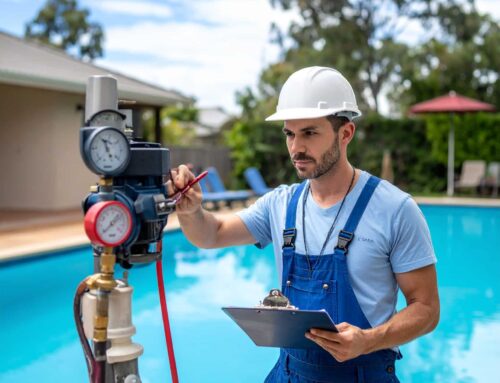
A green pool in January, a pump that’s screaming like a jet engine, or a salt chlorinator that’s stopped working the week before a birthday party – these aren’t just inconveniences. They’re the direct result of choosing the wrong pool service provider, or worse, trying to DIY through Australia’s harsh swimming season without proper expertise.
The pool servicing industry is crowded. A quick online search returns dozens of operators, from one-person outfits working weekends to established family businesses with SPASA accreditation. The problem? Not all pool service providers are created equal, and the cheapest quote often becomes the most expensive mistake.
This guide walks through the practical considerations that separate a reliable, professional pool service company from operators who’ll leave you with more problems than initially encountered. Effective pool service selection requires looking beyond price to evaluate expertise, credentials, and long-term value.
What Defines a Professional Pool Service Provider
Professional pool servicing isn’t about showing up, skimming leaves, and throwing in some chlorine. It’s a trade that requires technical knowledge, compliance with health regulations, and accountability.
A legitimate pool service provider carries public liability insurance, holds relevant industry certifications, and operates with proper ABN and business registrations. These aren’t just administrative boxes to tick – they’re protection when something goes wrong.
SPASA (Swimming Pool and Spa Association) accreditation matters. It signals that the business adheres to industry standards, stays current with training, and operates ethically. When a technician arrives with SPASA credentials, they’ve demonstrated commitment to their trade beyond just owning a pool net and a chemical test kit.
The difference shows in how they approach pools. A professional conducts a proper water test (not just eyeballing the water), checks equipment operation, inspects seals and fittings for wear, and keeps detailed service records. They spot problems early – a pump bearing starting to fail, a chlorinator cell scaling up, or a filter cartridge that’s past its useful life.
Compare that to the operator who rocks up, dumps in chemicals based on guesswork, and leaves without checking equipment. Three months later, the pump seizes, and there’s a $1,200 replacement facing the homeowner that could’ve been prevented with a $150 bearing service.
The True Cost of Pool Servicing
Price shopping for pool servicing is tempting, especially when quotes vary by $50-$100 per month. But the cheapest option rarely delivers value over a full season. Smart pool service selection considers comprehensive value, not just monthly fees.
Consider what professional pool servicing actually includes:
- Water testing and balancing using calibrated equipment, not pool shop test strips
- Chemical dosing based on specific pool volume, bather load, and environmental factors
- Equipment inspection covering pumps, filters, chlorinators, and automation systems
- Cleaning of skimmer baskets, pump baskets, and surface debris
- Record keeping that tracks chemical levels, equipment performance, and maintenance history
- Emergency response when something fails outside normal service hours
A cut-rate provider can’t deliver all this at $80 per month and still run a viable business. They cut corners – using cheaper chemicals, skipping equipment checks, or servicing pools on a rushed schedule that doesn’t allow proper attention.
The real cost emerges when a salt chlorinator cell fails prematurely because it wasn’t cleaned regularly, or a pool turns green because the operator didn’t adjust chemical dosing for 40°C summer days. Suddenly that $30/month saving has cost $600 in emergency call-outs and chemical correction.
Professional providers charge appropriately because they deliver comprehensive service that extends equipment life, prevents problems, and keeps pools safe for swimming. The monthly fee is insurance against the expensive failures that plague under-maintained pools.
Questions to Ask Before Hiring
Choosing a pool service provider requires due diligence beyond comparing prices. These questions separate professional operators from those who’ll disappoint:
“Are you SPASA-accredited and fully insured?” This isn’t optional. SPASA membership demonstrates industry commitment, and public liability insurance (minimum $10 million coverage) protects when something goes wrong during servicing. Ask to see certificates, and verify them independently.
“What does your standard service include?” Get specifics. How many visits per month? What equipment gets checked? How do they handle chemical balancing? What’s included in the base price versus what costs extra? A vague answer (“we do everything needed”) is a red flag.
“Who will actually service my pool?” Some companies send different technicians each visit, others assign a dedicated operator. Consistency matters – the same technician learns pool quirks, spots changes early, and builds accountability. If they can’t tell you who’ll show up, expect inconsistent service.
“How do you handle equipment failures?” Pumps fail, chlorinators stop working, and filters crack. What’s the response time? Do they carry common parts? What’s the call-out fee for emergencies? A professional provider has clear protocols and can get pools operational quickly.
“Can you provide references from similar properties?” If managing a strata complex, ask for references from other strata properties. If renting out a property, ask about their rental property experience. Different pool types require different expertise – a provider who excels with residential pools might struggle with commercial compliance requirements.
“What happens if I’m not satisfied?” Professional businesses offer clear service guarantees and complaint resolution processes. If they get defensive or vague about this question, they’re not confident in their work.
Red Flags That Signal Poor Service
Certain warning signs predict service problems before signing a contract. These red flags should guide pool service selection decisions immediately:
No written agreement. Professional pool servicing requires a clear service contract specifying visit frequency, scope of work, pricing, and terms. A handshake deal or verbal agreement leaves no recourse when service quality drops.
Pressure to sign immediately. “This price is only available today” or “I have one spot left this week” are sales tactics, not how professional service businesses operate. A legitimate provider gives time to consider the decision and compare options.
Cash-only payment. While not automatically disqualifying, cash-only operations often signal a business avoiding proper tax and insurance obligations. Professional providers offer multiple payment methods and provide proper invoices.
No service records. If they can’t show what they did during each visit – chemical readings, equipment checks, issues found – they’re not doing proper servicing. Detailed records are essential for tracking pool health over time.
Reluctance to explain their process. A professional technician should be able to explain why they’re adding certain chemicals, how they determined the dosage, and what they’re checking during equipment inspection. If they can’t or won’t explain their work, they’re probably not doing it properly.
Inconsistent visit schedules. Pool service should happen on predictable days. If visits are irregular, get cancelled frequently, or happen at random times, the provider is over-committed or poorly organised.
The Importance of Local Knowledge
Pool servicing in specific regions requires knowledge that interstate or inexperienced operators lack. This local expertise significantly impacts pool service selection and long-term satisfaction.
Water quality varies significantly across regions. Bore water in some suburbs has high iron content that stains pool surfaces. Groundwater in coastal areas affects calcium hardness. A local provider understands these regional variations and adjusts chemical programs accordingly.
Australia’s climate is brutal on pool equipment. Summer temperatures above 40°C stress pumps and chlorinators. High UV exposure degrades chlorine faster than in southern climates. Providers familiar with local conditions know how to compensate – increasing chlorine dosing during heat waves, checking pump cooling more frequently, and recommending equipment suited to the climate.
Local supplier relationships matter. When a pump fails on a Friday afternoon, a well-connected local provider can source parts quickly through established supplier relationships. An operator without those connections leaves pools dead all weekend.
Compliance requirements differ by council. Some local governments have specific requirements for pool equipment, fencing, and water discharge. A provider working regularly in an area knows these regulations and ensures pools remain compliant.
Response time depends on proximity. A service provider based locally can respond to emergencies far faster than one based hours away. When a pool turns green the day before guests arrive, that response time matters.
This local expertise is why Indigo Pool Care focuses specifically on dedicated service areas rather than trying to service entire metropolitan regions. Depth of local knowledge beats geographic coverage every time.
Different Pools Require Different Expertise
Not all pool service providers handle all pool types equally well. Matching the provider’s expertise to specific situations prevents frustration and ensures proper pool service selection.
Residential pools are the most common, but even within this category, requirements vary. A fibreglass pool with a salt chlorinator needs different care than a concrete pool with a traditional chlorine system. Providers specialising in residential pool care understand these nuances and adjust their service accordingly.
Rental properties present unique challenges. The pool service provider needs to coordinate with property managers, respond to tenant issues, and maintain the pool to a standard that satisfies both landlord obligations and tenant expectations. Not all operators handle this coordination well. Landlords or property managers should choose a provider experienced with rental properties who understands the compliance and communication requirements.
Strata and community pools operate under different regulations than residential pools. They require compliance with health department standards, detailed record-keeping, regular testing by certified labs, and often more frequent servicing. A provider who excels at residential pools might lack the systems and certifications needed for strata properties. Verify that providers have commercial pool experience and relevant certifications for these complex installations.
Pools with complex equipment (automation systems, variable-speed pumps, advanced sanitisation systems) need technicians who understand these technologies. Not every pool service operator has experience with modern pool equipment beyond basic pumps and chlorinators.
What to Expect from Quality Service
Understanding what professional pool servicing looks like helps evaluate whether providers are delivering value. This clarity improves pool service selection outcomes.
Consistent communication. Service reports should arrive after each visit, either via email, SMS, or through a client portal. These reports document what was done, what chemical levels were found, and any issues identified. If hearing from pool service only when something’s wrong, the communication isn’t adequate.
Proactive problem identification. A quality provider spots developing issues before they become emergencies. They’ll notice a pump running hotter than usual, a chlorinator cell that’s scaling up, or a filter pressure that’s creeping higher – and they’ll alert with recommendations before failure occurs.
Transparent pricing. All charges should be clear and predictable. If constantly receiving surprise invoices for “extras” that weren’t discussed, the provider either isn’t scoping work properly or is using add-ons to subsidise an unrealistically low base price.
Equipment longevity. Professional servicing extends equipment life significantly. A well-maintained salt chlorinator cell lasts 5-7 years instead of 3. A properly serviced pump runs for 8-10 years instead of failing at 5. If replacing equipment more frequently than expected, the servicing probably isn’t adequate.
Water quality consistency. Pools should maintain clear, balanced water week after week. Occasional issues are normal (heavy rain, high bather load, extreme heat), but if pools are constantly out of balance, the provider isn’t managing water chemistry properly.
Responsiveness. When contacting providers with questions or concerns, response should be prompt – within 24 hours for non-emergencies, within hours for urgent issues. If messages go unreturned, the provider is over-committed or poorly organised.
Making the Final Decision
After researching providers, checking references, and comparing offerings, the decision comes down to confidence and value alignment. This final stage of pool service selection determines long-term satisfaction.
Trust instincts about professionalism. How did they handle the initial enquiry? Were they punctual for the site assessment? Did they provide a detailed quote or just a rough price? These early interactions predict how they’ll handle ongoing service.
Consider the relationship, not just the transaction. Pool servicing is an ongoing relationship, potentially lasting years. Choose a provider that’s easy to communicate with, who explains things clearly, and who treats property with respect.
Verify credentials independently. Don’t just take their word about insurance and accreditation. Check SPASA membership directly, ask to see insurance certificates, and verify ABN registration. Professional providers expect this due diligence and provide documentation readily.
Start with a trial period. Some providers offer month-to-month contracts initially, allowing service quality evaluation before committing to a longer term. This reduces risk and gives an exit if service doesn’t meet expectations.
Get everything in writing. The service agreement should clearly specify visit frequency, scope of work, pricing (including any variable charges), payment terms, notice periods, and complaint resolution processes. Never rely on verbal promises.
Why Professional Pool Servicing Pays for Itself
The value of professional pool servicing becomes clear over time, measured not just in water quality but in avoided costs and preserved equipment life. This long-term perspective justifies careful pool service company selection.
A professionally maintained pool requires fewer emergency call-outs, experiences less equipment failure, and maintains safe water chemistry consistently. The monthly service fee is offset by eliminated emergency costs, extended equipment life, and reduced chemical waste from proper dosing.
Property values benefit from well-maintained pools. A neglected pool with stained surfaces, failing equipment, and poor water quality is a liability during property sale or rental. A pristine pool maintained by professionals is an asset.
For strata properties and rental properties, professional servicing reduces liability exposure. Proper water testing, chemical records, and equipment maintenance demonstrate due diligence if health or safety issues arise.
Most importantly, professional servicing delivers peace of mind. There’s no wondering if the pool will be ready for the weekend, no dealing with equipment failures at inconvenient times, and no spending time trying to balance water chemistry or clean filters.
Finding the Right Provider for Your Pool
Choosing a pool service company requires looking beyond price to evaluate expertise, professionalism, insurance coverage, and service scope. The right provider brings technical knowledge, accountability, and consistent service that keeps pools safe, clean, and equipment functioning optimally. Effective pool service selection protects both investment and peace of mind.
Red flags like lack of insurance, no written agreements, inconsistent service schedules, and inability to explain processes should disqualify providers immediately. References from similar properties, SPASA accreditation, and detailed service contracts indicate professionalism.
Local knowledge matters in unique climate and water conditions. A provider familiar with the area understands regional water quality issues, climate impacts on pool chemistry, and local compliance requirements.
Different pool types require different expertise. Match the provider’s experience to specific situations – whether that’s a residential pool, rental property, or strata complex requiring commercial compliance.
Quality service delivers consistent communication, proactive problem identification, transparent pricing, extended equipment life, and reliable water quality. If current providers aren’t delivering these outcomes, it’s time to reconsider.
Conclusion
Selecting a pool service company involves careful evaluation of credentials, expertise, service scope, and local knowledge. The cheapest quote often becomes the most expensive mistake when providers cut corners, skip equipment inspections, or lack proper insurance and accreditation.
Smart pool service selection prioritises SPASA accreditation, comprehensive service inclusions, consistent technician assignment, transparent pricing, and proven expertise with specific pool types. Written agreements, detailed service records, and responsive communication separate professional operators from those who disappoint.
Local knowledge, supplier relationships, and proximity matter for both routine service and emergency response. Matching provider expertise to pool requirements – whether residential, rental property, or strata complex – ensures compliance and optimal maintenance outcomes.
Professional pool servicing pays for itself through extended equipment life, avoided emergency costs, consistent water quality, and property value protection. The monthly service fee is insurance against expensive failures that plague under-maintained pools.
Ready to find a reliable, professional pool service company that delivers comprehensive care? Contact us to discuss specific pool needs and how professional servicing maintains pools to the highest standards year-round.