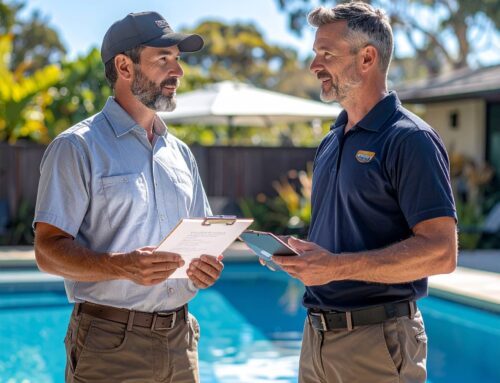
When a tenant moves into a rental property with a pool, the handover moment shapes everything that follows. Most pool-related disputes between landlords and tenants trace back to this single point: unclear expectations, missing safety information, or assumptions about who does what.
A proper pool tenant handover isn’t a five-minute walk-around. It’s a documented process that protects the landlord’s investment, keeps the tenant legally compliant, and prevents a sparkling pool from becoming a green liability three months into the lease.
Why Pool Handovers Fail
The typical scenario: a property manager hands over keys, points at the pool, mentions “there’s a service guy who comes monthly,” and leaves. The tenant nods, never having owned or maintained a pool before.
Fast-forward six weeks. The water’s cloudy. The tenant doesn’t know where the equipment is, what the filter does, or whether they’re supposed to add chemicals. They call the landlord, who assumed the tenant understood “basic pool care.” The monthly service visit finds a clogged skimmer basket, a filter that hasn’t been backwashed, and chemistry so far off it requires a complete rebalance.
This costs everyone. The landlord pays for corrective work that shouldn’t be necessary. The tenant feels blindsided by responsibilities they didn’t understand. The pool suffers accelerated wear.
The fix isn’t complicated – it’s documentation and education at handover.
Core Elements of a Pool Handover Checklist
A proper tenant pool handover checklist covers three domains: safety compliance, maintenance responsibilities, and equipment operation. Each section should be documented, signed, and stored with the lease.
Safety Equipment and Compliance
Perth pools must meet strict safety standards under the Building Act 2011 and Building Regulations 2012. Tenants don’t need to understand the legislation, but they must know what exists and what they’re responsible for maintaining.
Pool Fence and Gate Inspection: Walk the tenant around the entire pool barrier. Show them the self-closing, self-latching gate mechanism. Demonstrate how it should close and latch without assistance. Explain that they must report any damage, sagging, or malfunction immediately – this isn’t a “fix it at lease end” issue.
CPR Signage: Point out the current CPR chart location. It must be visible from the pool area and comply with current Australian Resuscitation Council guidelines. Tenants should know where it is, even if they never need it.
Emergency Contact Information: Provide written emergency contacts: the landlord or property manager, the regular pool service provider (if applicable), and local emergency services. This seems obvious until a pump fails on a Saturday and the tenant has no idea who to call.
Depth Markers and Warning Signs: If the pool has depth markers or “No Diving” signs, note their presence and the tenant’s obligation to maintain them. Faded or missing signage creates liability.
Document the pool barrier’s condition with dated photos at handover. This protects both parties if compliance issues arise during the tenancy.
Maintenance Responsibilities
This is where most pool handovers fail. Vague statements like “the tenant is responsible for general upkeep” mean nothing when the tenant doesn’t know what “upkeep” entails.
Weekly Tasks: Clearly list what the tenant must do weekly, regardless of whether professional servicing is in place:
- Empty skimmer and pump baskets
- Check and maintain water level (mid-way up skimmer opening)
- Brush walls and floor if visible debris or algae appear
- Test water chemistry (if tenant-managed)
- Run the pool equipment for the required daily hours
For tenants unfamiliar with pools, “empty the skimmer basket” means nothing without a physical demonstration. Show them where it is, how to remove it, how to clean it, and how to replace it properly. Same for the pump basket.
Chemical Management: If the tenant is responsible for chemical dosing (less common but not rare), this requires detailed instruction. Don’t assume they understand pH, chlorine, or alkalinity. Provide written guidelines for acceptable ranges and what to do if levels are off.
Most landlords avoid this liability by including professional rental property pool services in the lease structure. This removes the guesswork and ensures consistent water quality and equipment care.
What Tenants Are Never Responsible For: Clearly state what falls to the landlord or property manager:
- Equipment repairs and replacements
- Major chemical corrections (e.g., acid washing, algae treatment beyond basic shocking)
- Filter media changes
- Pump or chlorinator servicing
- Pool safety barrier repairs
If the lease includes professional servicing, specify what that service covers and what it doesn’t. A monthly service typically handles chemistry, equipment checks, and cleaning – but not daily skimmer basket emptying or maintaining water levels between visits.
Equipment Operation and Location
Walk the tenant through every piece of pool equipment. Don’t point at a locked equipment box and assume they’ll figure it out.
Filtration System: Show them the filter type (sand, cartridge, or DE), where it’s located, and how it operates. Explain the timer settings and emphasise that they shouldn’t adjust them without approval. If the filter requires backwashing (sand or DE), demonstrate the process or clarify that it’s handled by the service provider.
Pump Operation: Identify the pump, explain its purpose (circulation and filtration), and show them the on/off switch. Explain the daily run time and why it matters. If the pump makes unusual noises or stops working, they need to report it immediately – not wait until the next service visit.
Chlorination System: Whether it’s a salt chlorinator, an inline chemical feeder, or manual dosing, the tenant needs to understand what system is in place and their role (if any). For salt systems, explain that they’ll need to monitor salt levels and report low readings. For manual systems, provide dosing instructions in writing.
Cleaning Equipment: Show them where the pool net, brush, and vacuum (if manual) are stored. If there’s a robotic or suction cleaner, demonstrate how to use it, where it’s stored, and what to do if it stops working. Clarify whether they’re expected to use it regularly or whether it’s part of the professional service.
Pool Cover or Blanket: If the pool has a cover, demonstrate proper use, storage, and care. Covers extend equipment life and reduce chemical use, but they’re useless if the tenant doesn’t know how to handle them.
Document equipment serial numbers and condition at handover. This prevents disputes about wear and tear at lease end.
Creating a Written Handover Document
A verbal walk-around isn’t enough. Create a written document that both parties sign and date. This becomes part of the lease record.
Pool Condition at Handover:
- Water clarity and chemistry readings (pH, chlorine, alkalinity)
- Equipment condition and operational status
- Visible wear or damage to pool surfaces, tiles, or coping
- Condition of pool fence, gate, and safety signage
- Dated photos of pool area, equipment, and barriers
Tenant Responsibilities:
- Daily/weekly maintenance tasks with clear instructions
- Chemical management (if applicable) with acceptable ranges
- Reporting requirements for equipment issues or safety concerns
- Water level maintenance expectations
- Cleaning equipment use and care
Landlord Responsibilities:
- Professional servicing schedule (if applicable) with provider contact details
- Equipment repair and replacement protocols
- Major chemical corrections or treatments
- Safety compliance inspections and maintenance
Emergency Procedures:
- Equipment failure contacts and procedures
- Water quality emergencies (e.g., severe algae, contamination)
- Safety barrier damage reporting
- After-hours emergency contacts
Signature Section:
- Tenant signature confirming they’ve received instruction on all equipment
- Tenant signature confirming they understand their maintenance obligations
- Tenant signature confirming they’ve received safety information and emergency contacts
- Landlord/property manager signature and date
Store this document with the lease. It’s evidence if disputes arise.
Common Tenant Questions to Address at Handover
Anticipate questions before they arise. The following come up repeatedly:
“How much will this cost me?” If the tenant is responsible for chemicals, provide an estimated monthly cost range based on pool size and typical Perth conditions. If professional servicing is included, clarify what (if anything) they’ll need to purchase themselves.
“What happens if something breaks?” Explain the reporting process and response timeline. Make it clear that equipment issues aren’t their financial responsibility but must be reported promptly to prevent damage.
“Can I heat the pool?” If the pool has a heater, explain how it works, whether they’re permitted to use it, and who pays for the energy cost. If there’s no heater, state that they can’t install one without written approval.
“What if I’m going away?” Provide guidelines for pool care during absences. For short trips (under a week), standard maintenance usually suffices. For longer absences, they may need to arrange additional servicing or notify the property manager.
“What if the pool goes green?” Explain that this usually indicates a maintenance lapse or equipment issue. Provide the contact process for professional assessment and correction. Make it clear that tenant neglect may result in cost recovery, but equipment failure is the landlord’s responsibility.
The Role of Professional Servicing in Tenant Properties
Most experienced landlords structure leases to include professional pool servicing. This removes the largest liability from inexperienced tenants while protecting the pool investment.
A professional service provider handles chemistry, equipment checks, cleaning, and early problem detection. The tenant’s role reduces to simple tasks: empty baskets, maintain water level, report issues. This division of labour prevents the majority of pool-related disputes and damage.
For landlords managing multiple properties or interstate investments, professional servicing isn’t optional – it’s risk management. A monthly service visit costs less than a single algae remediation or pump replacement caused by neglect.
Indigo Pool Care structures residential pool care specifically for rental property scenarios: consistent care, direct landlord communication, and tenant education when needed. The service provider becomes the third party that maintains standards without burdening the tenant with technical knowledge they don’t have.
Documenting Pool Condition Throughout the Tenancy
Pool tenant handover documentation isn’t a one-time event. Regular condition documentation protects both parties.
Service Provider Reports: If professional servicing is in place, service reports provide ongoing documentation of pool condition, chemistry, and equipment status. These reports establish whether the pool is being maintained properly or whether tenant neglect is occurring.
Periodic Inspections: Property managers should include pool-specific checks in routine inspections. Document water clarity, equipment operation, safety barrier condition, and any visible damage or wear. Compare findings to handover condition.
Tenant Reporting: Encourage tenants to report concerns early. A small leak, a noisy pump, or cloudy water are easier and cheaper to address immediately than after weeks of neglect.
Exit Condition Report: At lease end, document the pool condition using the same criteria as handover. Compare chemistry, equipment condition, surface wear, and safety compliance. This determines whether bond deductions are warranted and provides evidence if disputes arise.
Legal Considerations for Pool Handovers
Western Australian tenancy law doesn’t specifically address pool maintenance, but general principles apply. The landlord must provide a safe, compliant property. The tenant must maintain the property in reasonable condition and report damage or safety issues.
Safety Compliance is Non-Negotiable: If a pool barrier becomes non-compliant during the tenancy due to damage or wear, the landlord must repair it immediately. Tenants must report damage, but they’re not responsible for barrier maintenance beyond normal use.
Reasonable Wear Versus Neglect: A pool that develops surface staining over a three-year tenancy is reasonable wear. A pool that turns green because the tenant never emptied the skimmer basket is neglect. Documentation at handover and throughout the tenancy establishes the difference.
Dispute Resolution: If disagreements arise about pool condition or maintenance responsibilities, the handover document and service reports become critical evidence. Without documentation, disputes devolve into “he said, she said” arguments that rarely resolve cleanly.
Building a Sustainable Tenant Pool Care System
The best tenant handover checklist is one that prevents problems rather than documents them. This requires thinking beyond the single handover moment to the entire tenancy lifecycle.
Simplify Tenant Responsibilities: The less technical knowledge required, the better. Professional servicing plus simple weekly tasks (empty baskets, maintain water level) creates a sustainable system for tenants with no pool experience.
Provide Ongoing Support: Give tenants a clear contact path for questions or concerns. Whether that’s the property manager, the landlord, or the service provider, tenants need to know who to contact without searching through lease documents.
Educate Without Overwhelming: A 20-page pool care manual overwhelms tenants and gets ignored. A one-page checklist with photos and clear instructions gets used.
Plan for Turnover: When one tenancy ends and another begins, repeat the full handover process. Don’t assume the new tenant will “figure it out” based on what the previous tenant did.
For landlords and property managers seeking a structured approach to rental pool care, professional strata pool management services remove the complexity while maintaining property value and tenant satisfaction.
Conclusion
A comprehensive pool handover checklist isn’t bureaucracy – it’s protection. It protects the landlord’s investment by ensuring proper care. It protects the tenant from unexpected costs or responsibilities they didn’t understand. And it protects the pool itself from neglect or misuse that shortens its lifespan.
The investment is minimal: a few hours to create proper documentation, a thorough walk-around at tenant handover, and clear communication about responsibilities. The return is significant: fewer disputes, lower maintenance costs, and a pool that remains an asset rather than becoming a liability.
Whether managing a single rental property or a portfolio, treating the pool tenant handover as a critical lease component prevents the majority of pool-related problems that emerge during tenancies. Document everything, educate thoroughly, and establish clear lines of responsibility. The pool – and everyone involved – benefits.
For landlords seeking support with rental property pool care, contact us to discuss how professional servicing integrates with tenant responsibilities to create a sustainable, low-conflict pool care system.